
SIGNATURE GLAZE
Reactive Glaze Ceramics
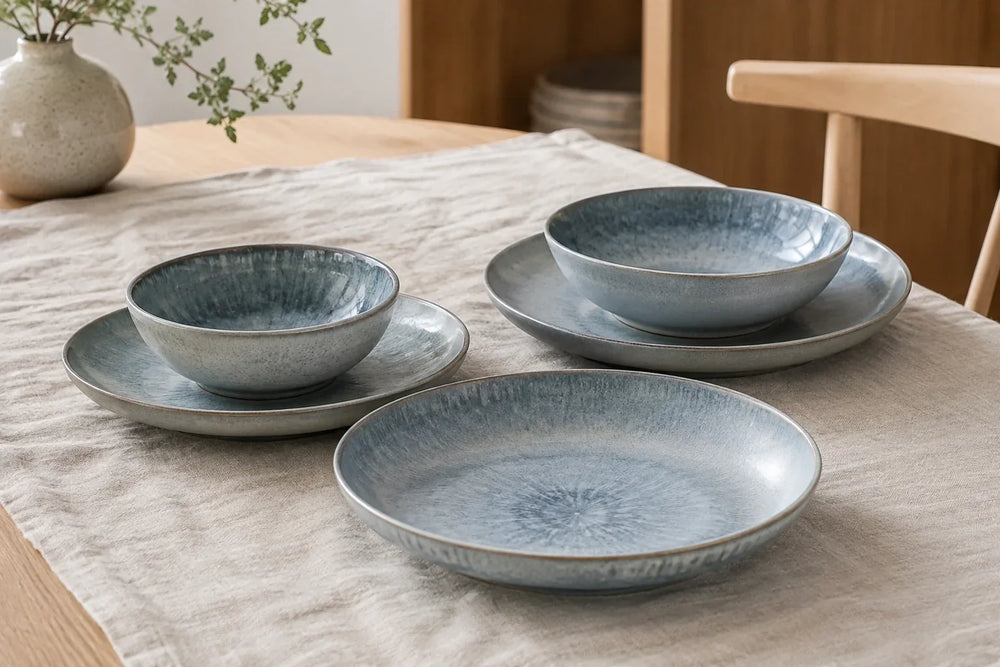
Discover reactive glaze ceramics, where the glaze responds to the heat and atmosphere of the kiln. As each piece fires, the glaze flows, pools and blends, so color shifts from rim to base and no two pieces turn out quite the same.
Explore reactive glaze mugs, cups, plates and bowls, each with its own movement and character. A little piece of the kiln's story for your everyday table.
-
Coral Mist Ceramic Side Plate -
Coral Mist Ceramic Rice Bowl -
Coral Mist Ceramic Pasta Bowl -
Azure Daydream River Ceramic Coffee Cup Set -
Caramel Mirage Ceramic Coffee Cup Set -
Sunset Cloud Reverie Ceramic Coffee Cup Set -
Azure Daydream Sky Ceramic Coffee Cup Set -
Mistwood Reverie Ceramic Coffee Cup Set -
Cobalt Constellation Ceramic Coffee Cup Set -
Emerald Dreamglaze Ceramic Coffee Cup Set -
Faceted Sand Brown Ceramic Coffee Mug | Sandstone -
Frostlight Dream Ceramic Coffee Cup Set -
Dusky Rose Daydream Ceramic Coffee Cup Set -
Shadowveil Slate Ceramic Coffee Cup Set -
Enchanted Grove Reverie Ceramic Coffee Cup Set -
Golden Orchard Dream Ceramic Coffee Mug -
Inkblue Moon Ocean Veil Ceramic Coffee Cup Set -
Moonlit Ivory Dune Ceramic Coffee Cup Set -
Azure Rope Ceramic Coffee Mug -
Ivory Sand Rope Ceramic Coffee Mug -
Sunlit Yellow Ceramic Coffee Mug -
Flowing Blue Ceramic Coffee Mug -
Blue Moon Mist Ceramic Coffee Mug -
Moonlit Alchemy Amber Twilight Ceramic Coffee Mug


HOW IT'S MADE
Where the kiln adds the final color
Reactive glazes are chosen for how they move. Glaze, heat and kiln work together, so every piece comes out of the firing with its own color story.
Glazes chosen for movement
Each piece is coated in glazes made to respond to heat. Even how thickly the glaze goes on starts to shape where color will pool and where it will break.
The glaze moves in the fire
As the kiln reaches temperature, the glaze melts and begins to flow. It drifts down the walls, gathers in curves and thins out at rims and edges.
The kiln has the final say
Temperature, kiln atmosphere and where a piece sits in the kiln all change the result, so color shifts from rim to base and from one piece to the next.
Variation, not defects
Shifts in color and pattern are part of the finish. A crack, chip or sharp edge is not, so if a piece ever arrives that way, contact us and we'll help.
LEARN MORE
From the journal
-
 What Is Reactive Glaze Dinnerware? Color Variation Explained
Learn why reactive glaze dinnerware varies in color and pattern, then use a simple styling guide and buying checklist to choose a set you will enjoy using.
Read the article
-
 How to Mix and Match Dinnerware: Find a Collection That Fits Your Table
Already have a few plates and bowls you like? Use the atmosphere of your home to choose a ceramic collection and add the next piece with confidence.
Read the article

FAQ
Questions about reactive glaze
The things people ask us most before choosing a reactive glaze piece.
What is reactive glaze?
Reactive glaze is a glaze that responds to the heat and atmosphere of the kiln. As it melts, it flows, pools and blends, so the color shifts across each piece instead of sitting as one flat tone.
Why does my piece look different from the photos?
How the glaze was applied, the kiln temperature and atmosphere, and where a piece sat during firing all change the final color and pattern. Expect the same color family as the photos, with its own flow and depth.
Is color variation a defect?
No. A softer band of color, a darker rim or a pattern that falls differently is part of the finish. A crack, chip or sharp edge is a condition problem, not glaze variation. If a piece arrives like that, please contact us.
Is reactive glaze food safe?
Yes. All Ertha Home ceramic tableware is made from food-safe materials and finished with food-safe glazes, made for everyday dining.
Can I use it in the microwave, oven and dishwasher?
Yes. Our ceramic tableware is microwave, oven and dishwasher safe. Avoid sudden temperature changes, and use a gentle cycle without overcrowding to keep the glaze looking its best.
Can I mix reactive glaze pieces from different collections?
Yes. Pieces with the same shape share the same size and capacity, so they sit together naturally. Repeat one color or keep your linens simple and the mix will feel intentional. Our guide to mixing and matching dinnerware has more ideas.
How is reactive glaze different from crystalline glaze?
Reactive glaze flows, pools and blends in the kiln, so color shifts softly from rim to base. Crystalline glaze grows distinct crystals inside the glaze as it cools, so it shows flower- and star-like blooms instead. See the difference in our crystalline glaze ceramics.